Hello fellow traveler! If you are planning a journey to the enchanting ancient town of Hoi An, you have come to the right place. Moving beyond generic internet brochures, this comprehensive guide is built on real footprints, hard-earned practical lessons, and intimate conversations with local residents. Let us dive into discovering Hoi An in the most authentic, cost-effective, and safe way possible.
1. Quick Budget Summary and the Ideal Time to Visit
To help you map out your trip effortlessly, here is a breakdown of essential budget figures and seasonal timing for an independent trip to Hoi An.
- Estimated Cost: Ranging from 1,500,000 VND to 2,500,000 VND ($60 – $100 USD) per person for a standard 2-day, 1-night itinerary. This baseline includes mid-range accommodation, local meals, entrance tickets, and inner-city transportation.
- Dry Season (February – August): The most beautiful window of the year. The weather is dry and sunny, and the beaches are crystal clear, making it perfect for outdoor explorations and photography.
- Rainy Season (September – January): Hoi An sees persistent rainfall and occasional flooding, especially between October and November. However, visiting now rewards you with a deeply nostalgic, quiet Ancient Town free of tourist crowds, alongside significantly lower accommodation rates.
“Hoi An is beautiful year-round, but capturing the golden sunlight striking the moss-backed yellow walls, or watching the quiet rise of the Thu Bon River during the flood season, requires you to physically walk these alleys and breathe with the town to truly feel its soul.”
— Insight from Mr. Tien, founder of Trai Ga Gam Tien, during his cultural inspiration journey across Da Nang City.
2. Navigating Your Way to Hoi An Safely and Economically
Hoi An does not have its own airport or train station. The most common transit hub is Da Nang City, located roughly 30 kilometers north of Hoi An.
- Motorbike: The ultimate choice for freedom seekers. You can rent a scooter in Da Nang for around 120.000 VND to 150.000 VND per day. The coastal route via Vo Nguyen Giáp and Truong Sa streets is a straight, well-paved, and highly scenic drive.
- Shared Shuttle Bus: Costing between 50,000 VND and 80,000 VND per seat, this is the most budget-friendly motorized option, though you must align your schedule with fixed transit timetables.
- Grab or Traditional Taxi: Best suited for groups of 3 to 4 people, families with seniors, or young children. A one-way trip costs around 300,000-400,000 VND. We highly recommend negotiating a fixed-price contract with the driver beforehand instead of relying on the meter to secure a better rate.
3. Must-Visit Checkpoints and Immersive Experiences
When exploring Hoi An, we recommend balancing your time between the historical architecture of the core heritage zone and the eco-tourism villages on the outskirts.
Exploring the Core Heritage of the Ancient Town
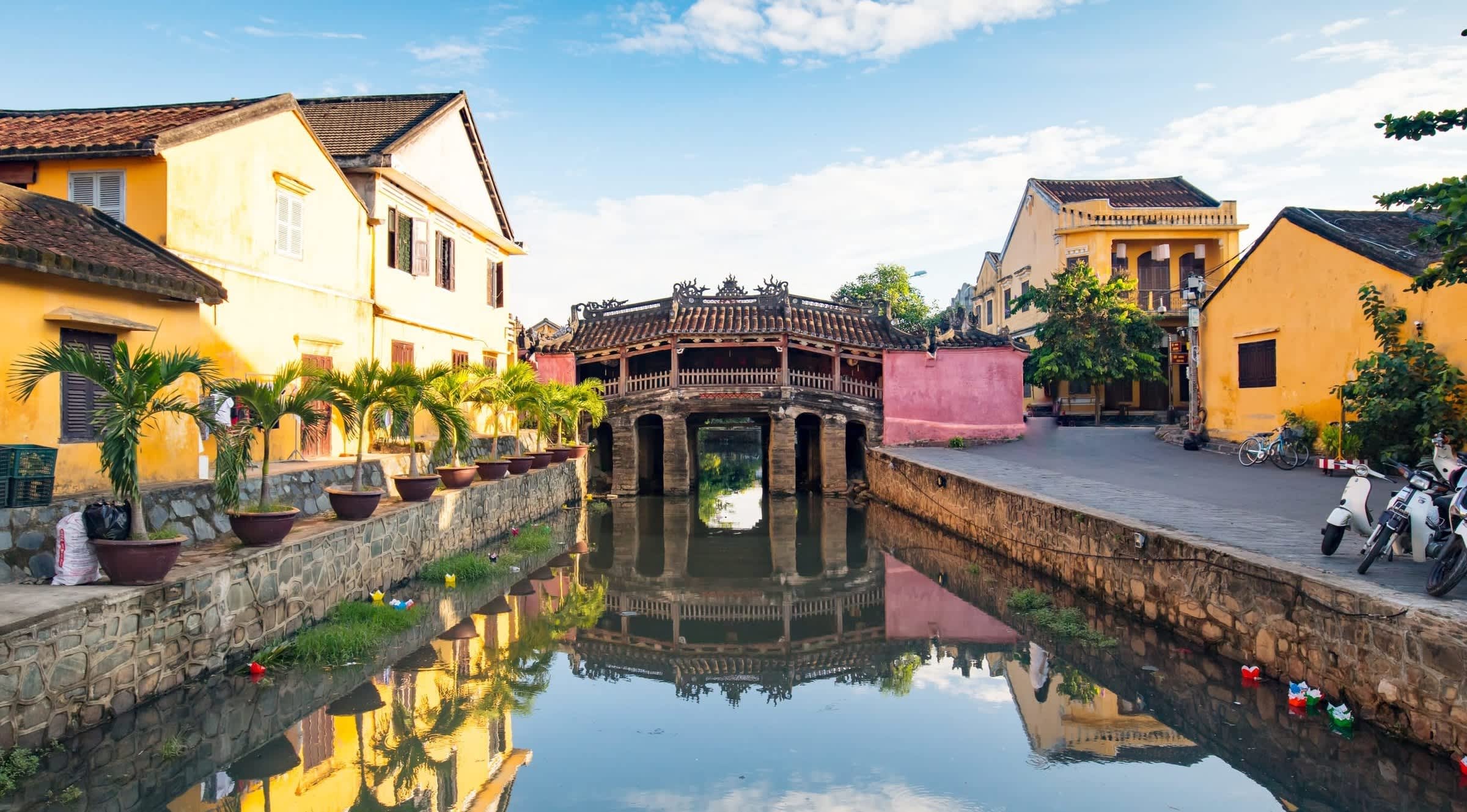
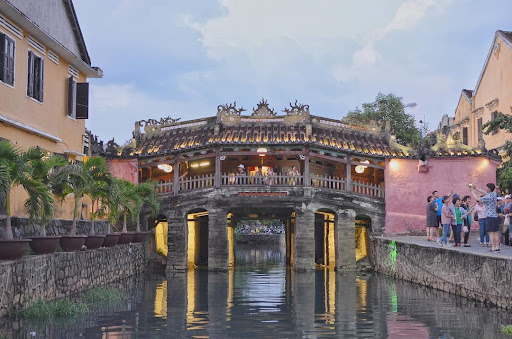
- The Japanese Covered Bridge (Chua Cau): An invaluable symbol of cultural fusion between Vietnam and Japan. Following a monumental restoration project, the bridge stands structurally resilient while beautifully retaining its centuries-old spiritual essence.
- Fujian Assembly Hall and Tan Ky Old House: Exceptionally preserved heritage sites where you can marvel at master-class wood carvings and learn about the affluent lifestyles of 18th-century merchants.
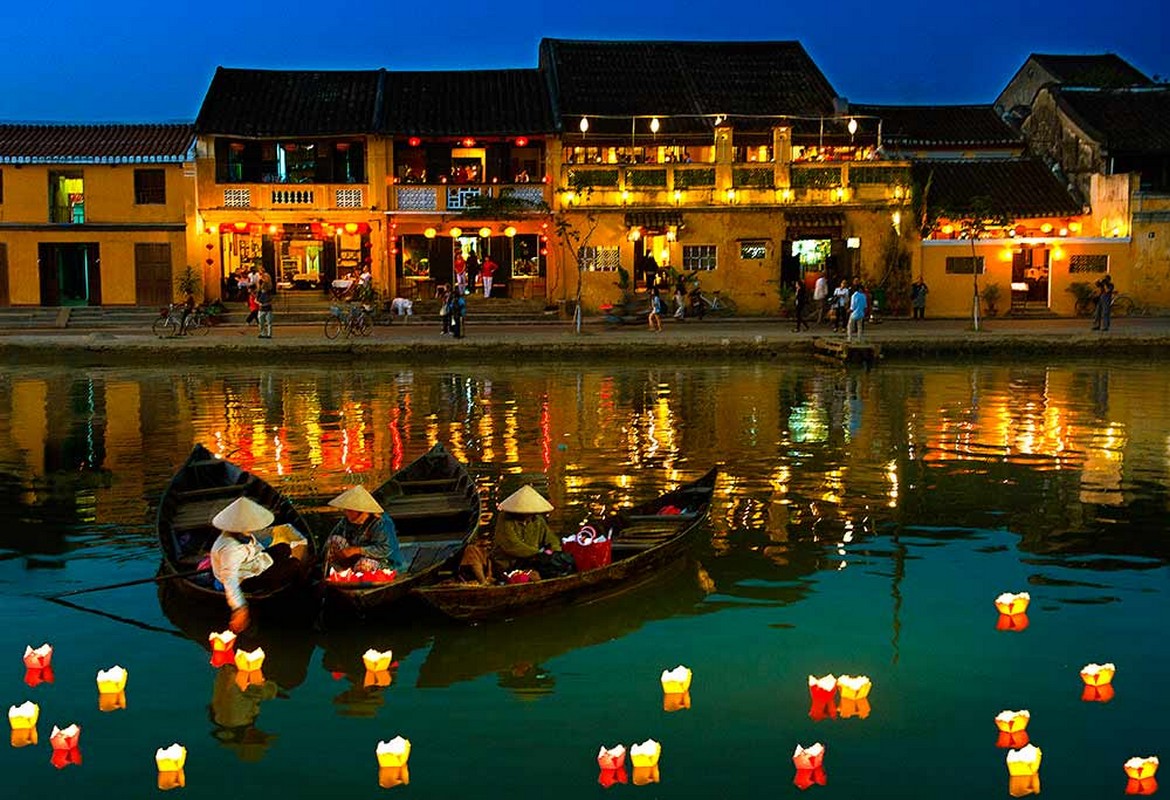
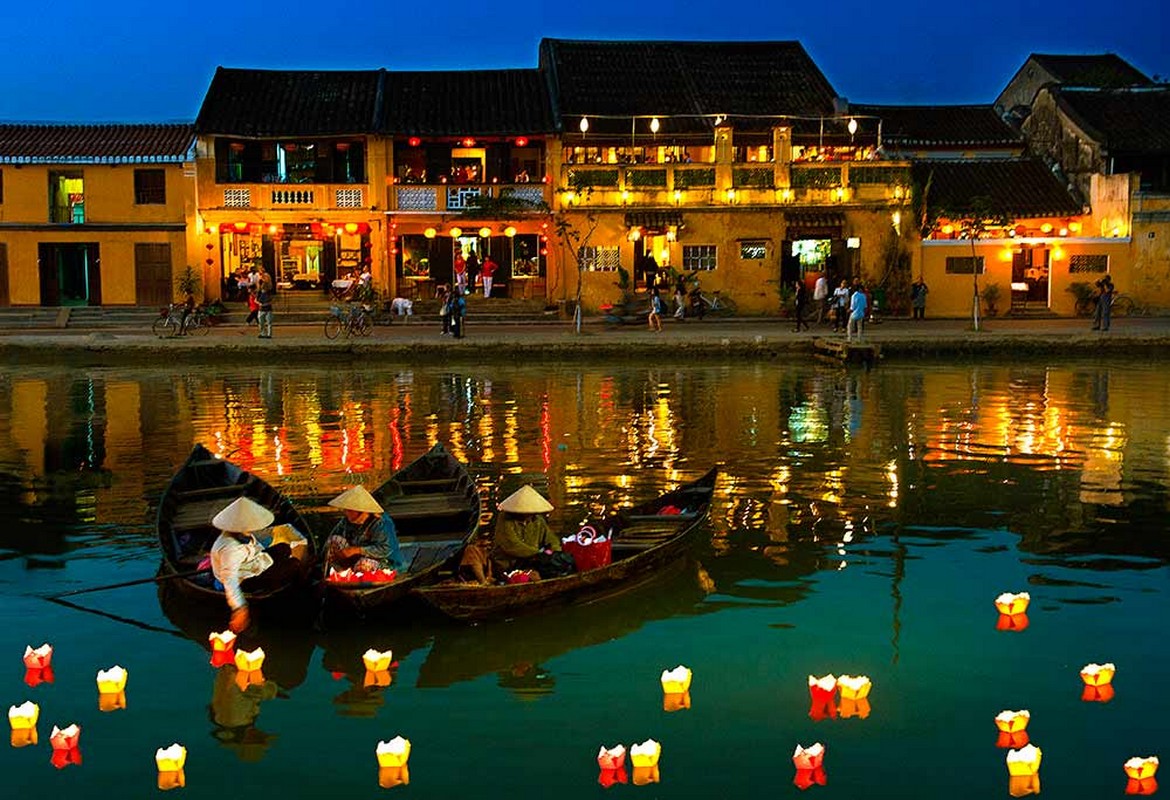
- The Lantern Festival Experience: If your trip falls on the 14th day of any lunar month, the entire town switches off its modern electrical grid to illuminate the streets with traditional lanterns. You can purchase a small paper lantern for 10,000 VND to release onto the Hoai River, sending your wishes into the night.
Outlying Eco-Tourism and Traditional Craft Villages
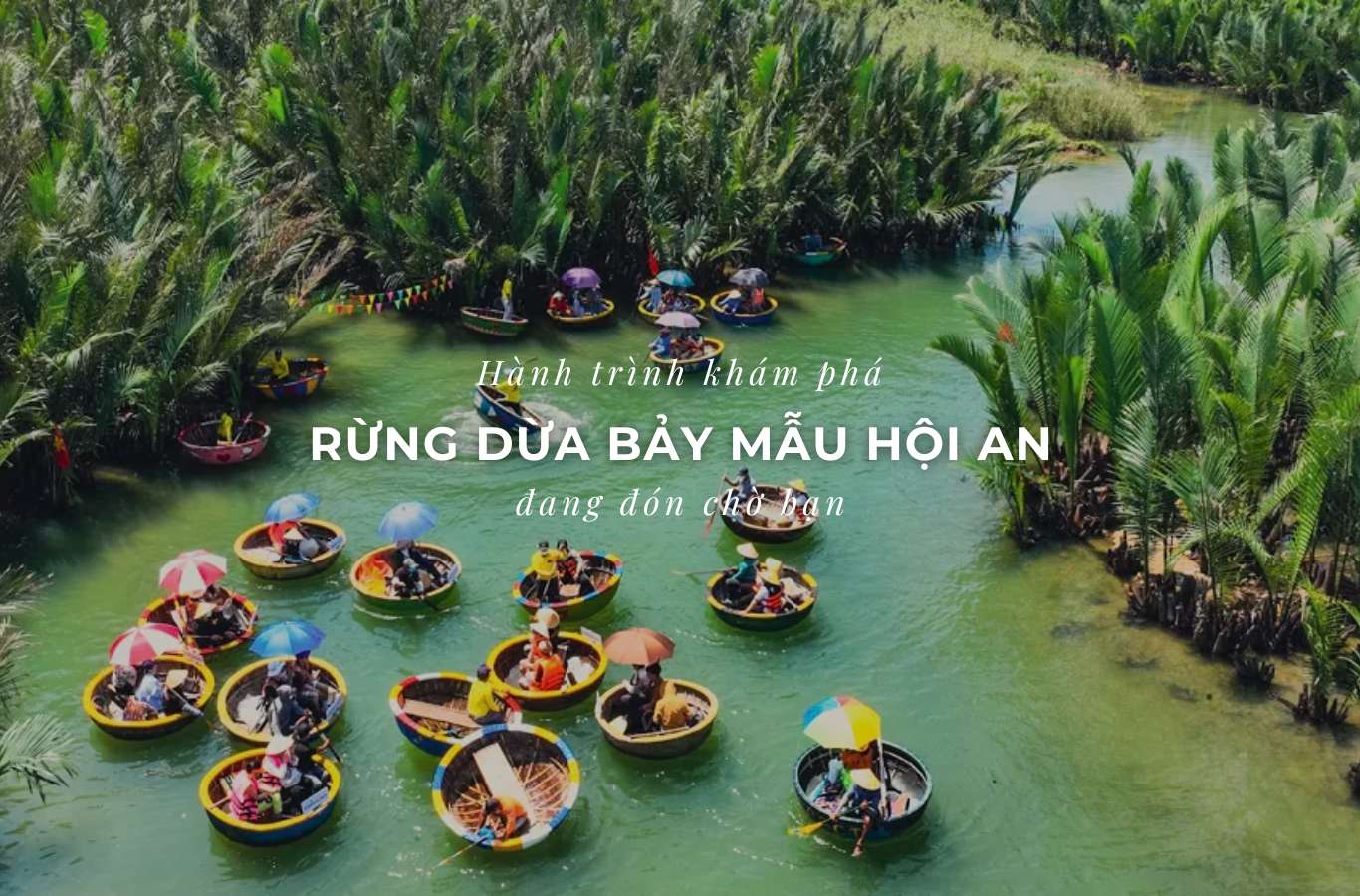
- Bay Mau Coconut Forest (Cam Thanh): Located 3 kilometers from the town center. Here, you will board a traditional bamboo basket boat to glide through dense nipa palm canals and witness high-energy basket boat spinning performances by local rowers.
- Tra Que Vegetable Village: A peaceful sanctuary for those looking to escape the bustle. You can experience a day in the life of a local farmer, practicing traditional tilling techniques, planting herbs, and savoring rustic dishes directly in the gardens.
4. What to Eat in Hoi An: A Masterclass in Local Flavors
Hoi An’s culinary scene is arguably the biggest anchor that keeps travelers staying longer. The local food offers a distinct, deeply savory profile that cannot be replicated elsewhere.
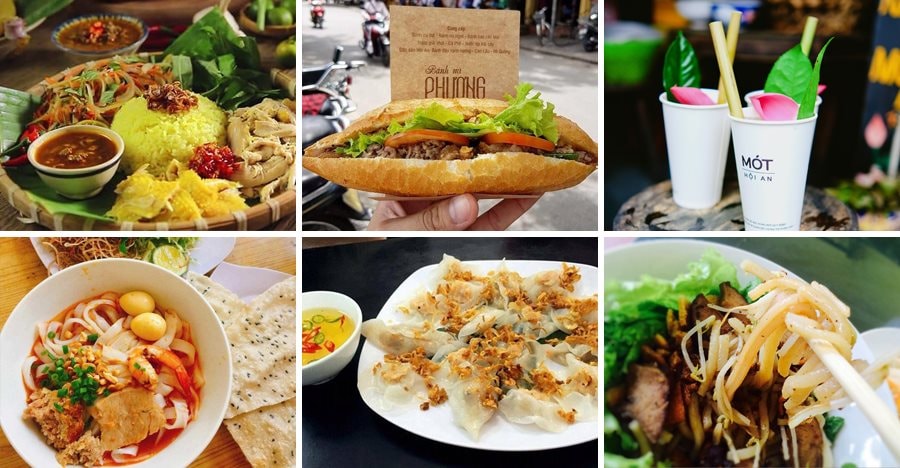
- Cao Lau: A legendary noodle dish featuring thick, chewy golden-brown noodles topped with savory char siu pork, crispy pork rind croutons, and fresh Tra Que greens. Authentic Cao Lau noodles must be processed using ash water sourced from Cham Island and fresh water drawn from the ancient Ba Le well. Thanh Cao Lau or Lien Cao Lau are highly recommended spots to try the original flavor profile.
- Hoi An Chicken Rice (Com Ga): Rice cooked to a perfect, fluffy texture in chicken broth and turmeric, yielding a signature golden hue. The chicken is shredded, hand-tossed with onions, Vietnamese coriander, and lime juice. Com Ga Ba Buoi and Com Ga Ty are household names among food connoisseurs.
- Banh Mi Hoi An: Celebrated globally as one of the world’s finest sandwiches. The baguette is remarkably light, pointed at both ends, and served warm with a crispy crust. It is loaded with rich pate, homemade mayonnaise, char siu pork, and a secret savory sauce. Banh Mi Phuong and Banh Mi Madam Khanh are the two iconic establishments you must try.
5. Crucial Safety Precautions and Service Pitfalls to Avoid
While Hoi An is an incredibly welcoming and civilized destination, keeping these practical safety tips in mind will ensure your vacation remains stress-free:
- Watch out for “Basket Boat Brokers” near Cam Thanh: As you approach the Bay Mau coconut forest area, you will likely encounter aggressive motorbike riders trying to flag you down to sell cheap basket boat tickets or offer guide services. Politely decline and drive directly to the registered ticket booths or your pre-booked eco-lodge to avoid hidden fees on mandatory dining packages.
- Confirm Boat Prices on the Hoai River: Lantern boat rides have official prices clearly posted at the docks (around 150,000 VND to 200,000 VND per boat depending on passenger count). However, during peak festival nights, independent operators may attempt to quote inflated prices. Always clarify the total cost and the exact number of complimentary paper lanterns included before stepping on board.
- Water Safety Protocols: Whether you are riding basket boats in Cam Thanh or taking evening cruises on the Hoai River, always keep your life jacket securely fastened. The Hoai River appears calm on the surface, but certain sections have strong undercurrents; prioritising your and your family’s safety is paramount.
- Dress Code for Cultural Sites: Hoi An is home to numerous sacred temples, shrines, and communal assembly halls. When visiting these historic spaces, dress modestly by covering your shoulders and knees to show respect for local spiritual traditions.
To make sure your independent journey is seamless and that you don’t miss out on any incredible experiences across Central Vietnam, you should also explore our comprehensive Da Nang Travel Guide from A to Z for Independent Travellers to plan a truly meaningful and complete vacation.